
Seminole Release Dates Compared
A date beside a person's name is not always a promise that the person will walk out that day. In the Seminole County Jail, a person awaiting trial has not reached a sentence end date. Release can depend on a preset citation bond, a bond set after first appearance, dismissal, transfer, or a new court order. The jail's live roster answers who is booked now. Its arrest-date search can later show RELEASED, but the public display does not provide a precise release time or destination.
Georgia state-prison records use more exact terms. The Georgia Department of Corrections individual record may show Max Possible Release Date, Actual Release Date, and Current Status. The max date is the end of the longest-running sentence after credit for qualifying time spent in county jail before conviction and sentencing. An actual date records what occurred. The Parole Board's Tentative Parole Month, or TPM, is different again. It is a month for final review, not a final order to release.
Find a Seminole Projected Date
Start with the legal status, not with a date copied from an old result. Seminole County Jail serves the Sheriff's Office, Donalsonville Police Department, and other agencies as needed. Leaving that building can mean release to the community, transfer to another jail, entry into GDC, or delivery to an agency with a hold. Each outcome sends the search to a different source.
- Check local custody. Use the Sheriff's Current Inmates portal. If the person is absent, search Inmates by Arrest Date around the booking date and look for
RELEASED. - Identify the court and sentence. Read the court field in the jail row. A pretrial case may turn on bond or a Magistrate hearing, while a sentenced county-jail term requires the jail and sentencing court to calculate credit and completion.
- Search state records when applicable. For a person sentenced to GDC, select inactive offenders or both active and inactive offenders. Search by name, GDC ID, case number, conviction county, offense, or most recent institution.
- Compare the date labels. Read max possible release, actual release, status, sentence blocks, and incarceration history together. Do not treat a summary row's institution field as proof of present custody.
- Verify the result. Call the jail at (229) 524-8396 for local physical custody. GDC directs written verification to Inmate Records and Information, P.O. Box 1529, Forsyth, GA 31029.
The broader Seminole County released-inmate search explains how court disposition, jail records, and state records fit together after release. For a formal local record, the Sheriff's open-records form accepts requests for booking reports and related jail material.
GDC Seminole Release Fields
The GDC query is the strongest public date source only when the person entered Georgia state custody. It is not the right tool for a routine Seminole County bond release. After accepting the GDC disclaimer, choose “Only Inactive Offenders (Not Currently Incarcerated)” or “Both Active and Inactive Offenders” when release may already have occurred. Limiting the search to active offenders can hide the very record being sought.
The GDC offender query shows how the state separates identifiers, sentence data, and release fields. Its inactive scope is essential for a Seminole County conviction because a released state prisoner may no longer appear under currently incarcerated results.
| GDC field | What it means |
|---|---|
| Max Possible Release Date | Expiration of the longest-running sentence after applicable county-jail credit, not a guaranteed departure date. |
| Actual Release Date | The recorded date GDC custody ended for that incarceration event. |
| Current Status | Whether the GDC record is active or inactive; inactive means not currently incarcerated by GDC. |
| Incarceration history | Begin and end dates that place the release field in the correct custody period. |
| Sentence blocks | Case, offense, conviction county, length, and related terms that may run together or one after another. |
Georgia Release Credit Rules
Georgia does not apply one broad “85 percent” formula to every Seminole County sentence. Under O.C.G.A. § 42-5-101, GDC may award work incentive credit to qualifying people serving felony prison terms other than life. Institutional progress, satisfactory work, and satisfactory behavior can support up to one day of credit for each qualifying day. GDC reports those credits to the Parole Board. The Board may consider them during final parole review or use them to advance an existing tentative parole date.
This credit is not the same as an automatic sentence cut. Parole eligibility under O.C.G.A. § 42-9-45 generally begins after nine months or one-third of a felony sentence, whichever is greater. Aggregate terms of at least 21 years generally reach eligibility after seven years, unless another law controls. Eligibility merely permits consideration. It does not set an actual release date.
Certain serious violent felony sentences follow a much stricter rule. O.C.G.A. § 17-10-6.1 covers specified crimes and can require the full prison term imposed by the judge, without parole or other sentence-reducing measures, subject to the statute's terms and exceptions. The Parole Board summarizes qualifying non-life crimes committed on or after January 1, 1995 as 100 percent service. The offense date, conviction, and sentence must therefore be checked before estimating release.
The published Georgia parole eligibility statute provides the governing eligibility framework.
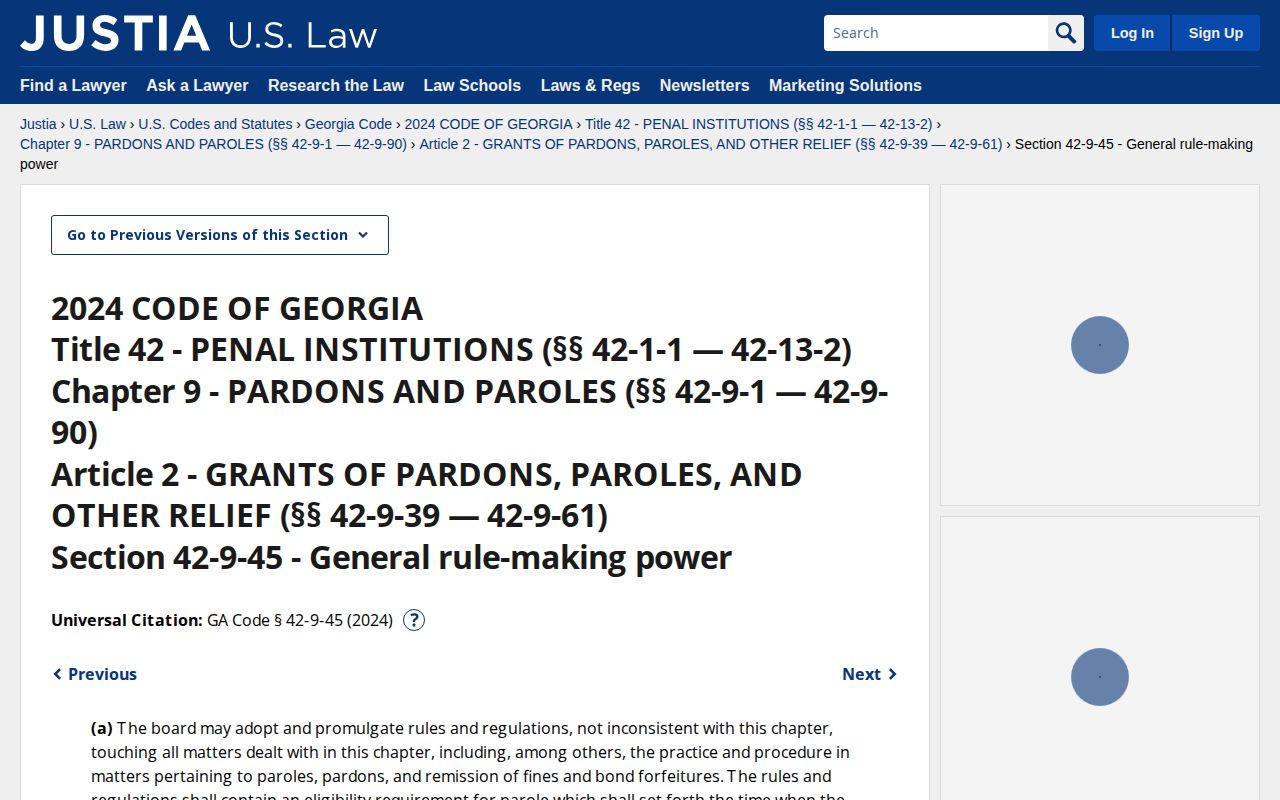
The statute explains when review can begin, while GDC and the Parole Board still control the separate calculation and final decision shown in an individual record.
Georgia's Three Release Clocks
Seminole County date questions often mix three clocks. A county-jail clock follows bond, local sentence credit, court orders, and any outside hold. A GDC clock follows the longest-running state sentence, jail credit, and the state record's max possible date. A parole clock follows eligibility, a possible TPM, final Board review, and a later effective release date. None can safely be substituted for another.
A TPM may be delayed or canceled after misconduct. It can also depend on treatment, counseling, or other preconditions set in the parole process. Even a favorable final review can change before the effective date. Conversely, an actual GDC release may occur before the max possible date through lawful parole or clemency. That is why the individual record and current Parole Board status matter more than an unsourced date repeated elsewhere.
- Pretrial detainee
- A person held before final judgment, often with release governed by bond and court action rather than a sentence end date.
- TPM
- A Tentative Parole Month for final review, not a promise or final parole release date.
- Detainer
- A request or hold from another agency that can cause transfer instead of community release.
- Discharge
- The end of a sentence or supervision obligation, which is distinct from release onto parole or probation.
What Moves Seminole Release Dates
A projected date moves when the facts behind its calculation change. The source of the change also determines who can explain it. The jail can address local physical custody. The sentencing court controls its order. GDC maintains the state sentence record, and the State Board of Pardons and Paroles controls parole decisions.
| Factor | Possible effect | Verify with |
|---|---|---|
| County-jail credit | May move the max possible date earlier when credited before conviction and sentencing. | GDC record and sentencing court |
| Work incentive credit | May inform final parole review or advance an established tentative date for a qualifying person. | GDC and Parole Board |
| Institutional misconduct | May postpone or cancel a TPM and affect earned credit. | GDC and Parole Board |
| Detainer or hold | May cause transfer to another county, state, federal, or immigration agency rather than release home. | Jail and receiving agency |
| New court order | May change bond, credit, sentence terms, or custody authority. | Court of record |
| Parole action | May set, advance, postpone, deny, or withdraw a release outcome. | State Board of Pardons and Paroles |
Overlapping sentences also deserve care. An individual record can contain current and prior sentence blocks, and a single person can have more than one case number. One count may end while another still supports custody. The max possible date follows the longest-running sentence, so adding the length of one charge to an arrest date can produce a false answer. Use the sentence blocks and incarceration history, then compare them with the signed judgment held by the court.
A local transfer creates another common error. If Seminole County Jail reports that a person left its custody, the date proves only the local movement unless the record says release to the community. A receiving county, GDC, the U.S. Marshals Service, BOP, or ICE may hold the person next. Ask the jail for the destination or releasing authority when available, then move to that system. A BOP result marked released or not in BOP custody concerns federal custody. It does not settle a Georgia jail, state sentence, or immigration hold.
Confirm Seminole Actual Release
Use a pending date as a prompt to verify, not as travel confirmation. For Seminole County Jail, call the jail and ask whether the person remains physically held, is in release processing, has left for the community, or has been transferred. If the online arrest-date row says RELEASED but exact timing or reason matters, request the booking or release record through the Sheriff's records page. Court records then establish whether the case remains pending, ended, or moved into probation.
For a state prisoner, compare the GDC individual record with the Parole Board's TPM lookup or parolee database when parole is involved. Georgia's V.I.P. line, 1-800-593-9474, can report maximum or scheduled release information, parole status or eligibility, location, and whether the person is not in custody when the caller has the GDC ID or six-digit case or EF number. The separate VINELink Check explains web and phone notification registration.
Note: a release alert can lag and does not replace a certified jail, court, GDC, or supervision record.